In this article
- SNF Coinsurance 2027 at a Glance
- How the SNF Benefit Period Works
- SNF Coinsurance 2027 Worked Example
- How to Bill SNF Coinsurance: 6 Steps
- Who Pays SNF Coinsurance? Medigap, Medicaid and Medicare Advantage
- SNF Bad Debt and Unpaid Coinsurance
- Texas Note: Texas Medicaid Crossovers for Dual-Eligible Residents
- Common Mistakes and Denials
- What SNF Coinsurance 2027 Means for Your SNF
- Key Takeaways
- FAQs
- Get Ready for SNF Coinsurance 2027 Now
- Sources
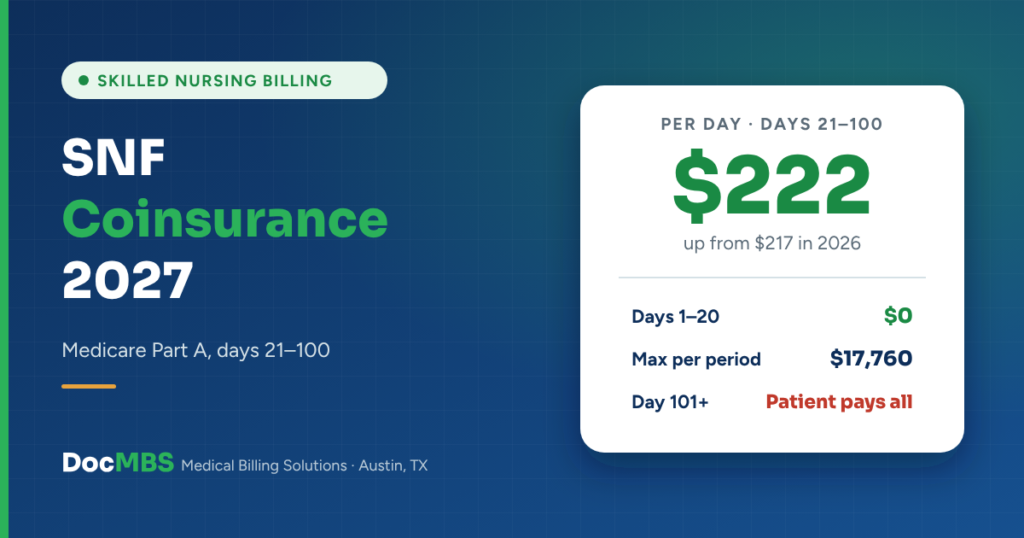
SNF coinsurance 2027 is $222 a day for days 21 through 100 of a skilled nursing stay. That’s $5 more per day than in 2026. Starting January 1, every resident past day 20 owes more, and admissions, the business office and billing all need the new number before the first 2027 claim goes out. A wrong rate in your system means wrong patient statements, wrong crossovers and harder collections.
This guide gives you the official SNF coinsurance 2027 numbers and the other 2027 Medicare Part A amounts, explains the benefit period, shows the math, and covers how SNFs bill and collect coinsurance.
Quick Answer
SNF coinsurance 2027 is $222 a day for days 21–100 of a benefit period, up from $217 in 2026. Days 1–20 cost the patient $0. After day 100, the patient pays all costs. The 2027 Part A hospital deductible is $1,776. The new amounts start January 1, 2027.
Table of Contents
- SNF Coinsurance 2027 at a Glance
- How the SNF Benefit Period Works
- SNF Coinsurance 2027 Worked Example
- How to Bill SNF Coinsurance: 6 Steps
- Who Pays SNF Coinsurance? Medigap, Medicaid and Medicare Advantage
- SNF Bad Debt and Unpaid Coinsurance
- Texas Note: Texas Medicaid Crossovers for Dual-Eligible Residents
- Common Mistakes and Denials
- What SNF Coinsurance 2027 Means for Your SNF
- Key Takeaways
- FAQs
- Sources
SNF Coinsurance 2027 at a Glance
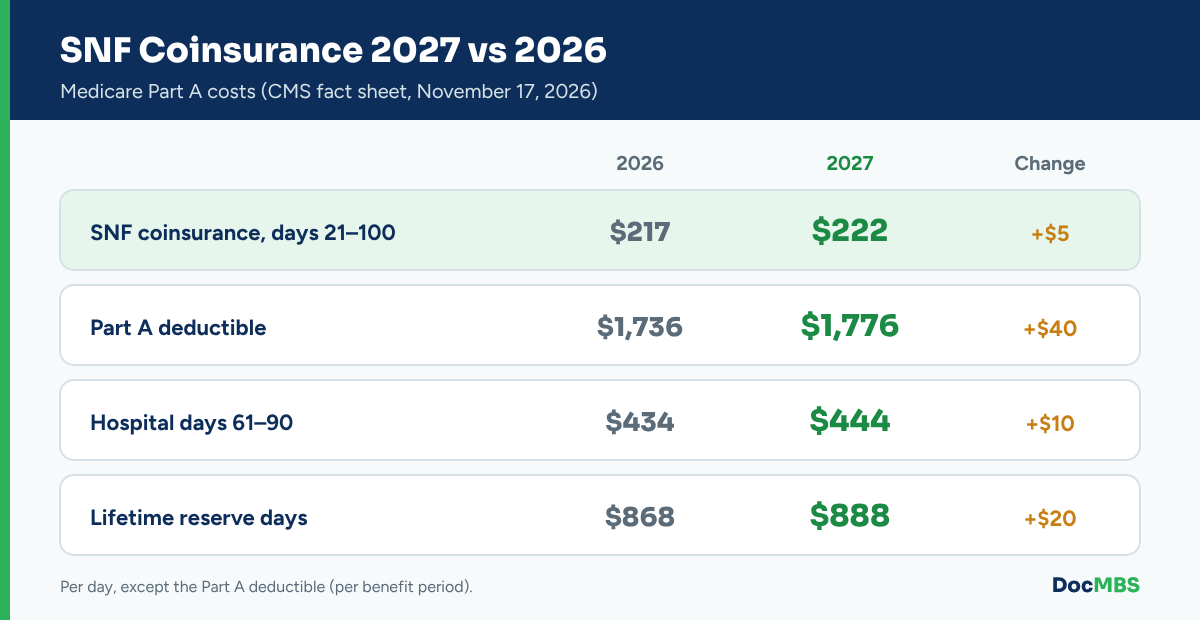
CMS released the “2027 Medicare Parts A & B Premiums and Deductibles” fact sheet on November 17, 2026. Here are the numbers that matter for SNFs and their residents:
| Item | 2027 | 2026 | Change |
|---|---|---|---|
| SNF coinsurance, days 21–100 (per day) | $222.00 | $217.00 | +$5.00 |
| SNF days 1–20 | $0 | $0 | No change |
| Part A inpatient hospital deductible (per benefit period) | $1,776 | $1,736 | +$40 |
| Hospital coinsurance, days 61–90 (per day) | $444 | $434 | +$10 |
| Lifetime reserve days (per day) | $888 | $868 | +$20 |
| Part A premium, reduced rate (monthly) | $328 | $311 | +$17 |
| Part A premium, full rate (monthly) | $597 | $565 | +$32 |
| Part B standard premium (monthly) | $209.40 | $202.90 | +$6.50 |
| Part B annual deductible | $292 | $283 | +$9 |
Most people don’t pay a Part A premium because they or a spouse worked long enough. The premium rows apply only to people who buy into Part A.
Watch Out: The maximum SNF coinsurance 2027 for one benefit period is 80 days × $222 = $17,760, up from $17,360 in 2026. For many residents, that’s more than their supplemental coverage or savings can cover, so plan collections early.
How the SNF Benefit Period Works
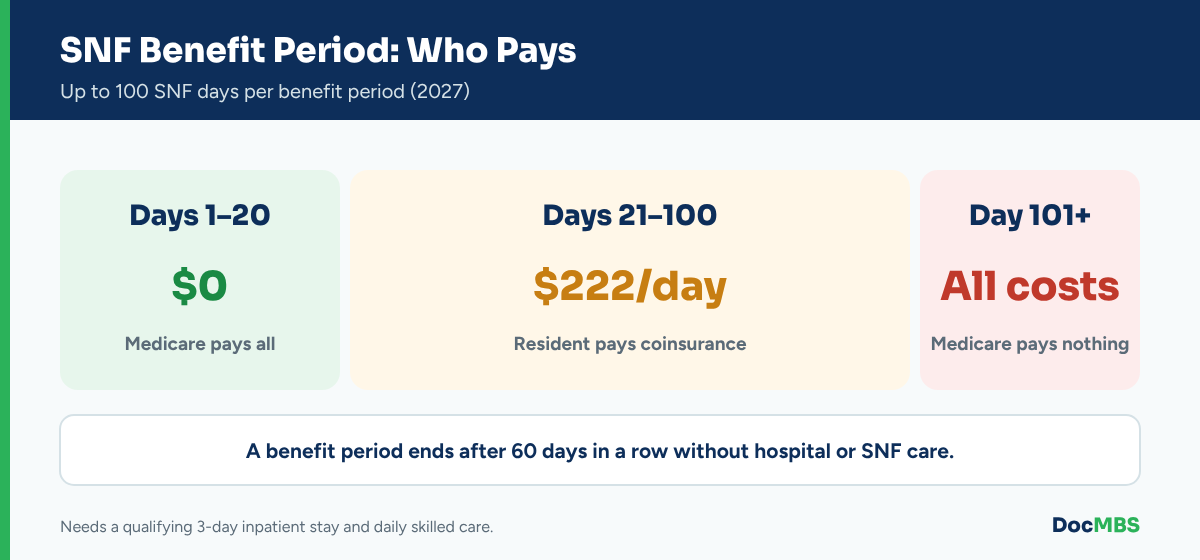
Medicare Part A covers up to 100 days of SNF care per benefit period, as long as the resident needs daily skilled care and had a qualifying 3-day inpatient hospital stay. See our SNF 3-day rule guide for the qualifying stay rules.
| SNF days in the benefit period | What Medicare pays | What the resident pays (2027) |
|---|---|---|
| Days 1–20 | All covered costs | $0 |
| Days 21–100 | All covered costs minus SNF coinsurance 2027 | $222 per day |
| Day 101 and after | Nothing | All costs |
When does a benefit period end? A benefit period ends when the resident has gone 60 days in a row without inpatient hospital care or skilled care in a SNF. A new hospital admission after that starts a new benefit period, with a new Part A deductible and a fresh set of 100 SNF days.
The 100-day count follows the resident, not the facility. Days used at another SNF in the same benefit period count toward the 100. That’s why you should check the resident’s prior SNF days at admission.
SNF Coinsurance 2027 Worked Example
These examples use the official 2027 and 2026 rates. The residents are illustrations, not real patients.
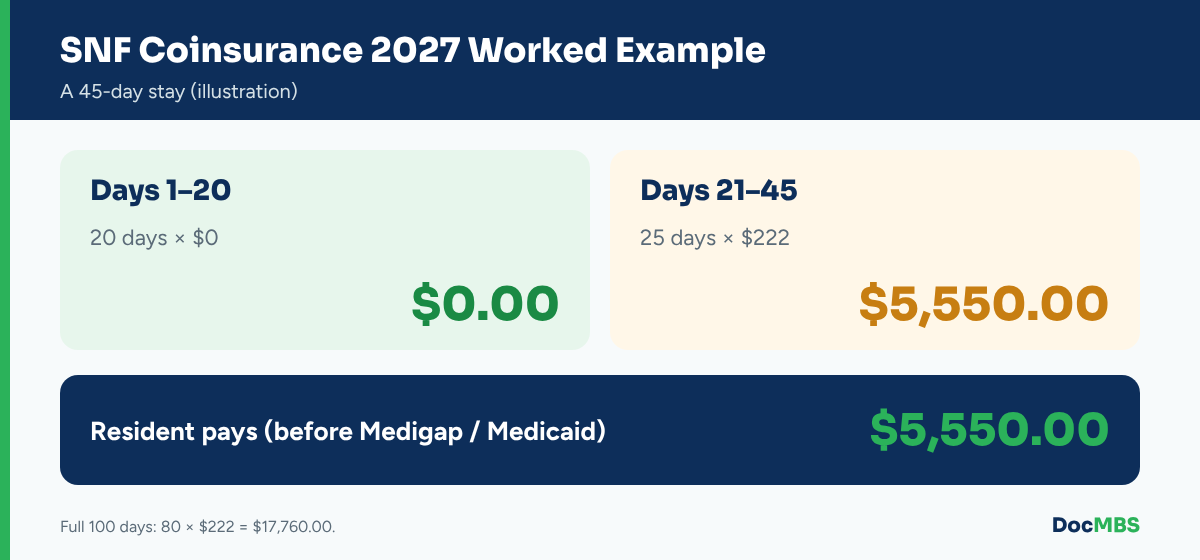
Example A: A 45-Day Stay in 2027
| Days | Daily resident share | Resident pays |
|---|---|---|
| Days 1–20 (20 days) | $0 | $0.00 |
| Days 21–45 (25 days) | $222 | 25 × $222 = $5,550.00 |
| Total SNF coinsurance | $5,550.00 |
If the same resident stayed all 100 days, the SNF coinsurance 2027 total would be 80 × $222 = $17,760.00.
Example B: A Stay That Crosses January 1
A resident reaches day 21 on December 22, 2026, and is discharged after day 45 on January 15, 2027.
- December 22–31 (10 coinsurance days): 10 × $217 = $2,170.00
- January 1–15 (15 coinsurance days): 15 × $222 = $3,330.00
- Total: $5,500.00
This SNF coinsurance 2027 example assumes each day is charged at the rate for the calendar year it falls in. [VERIFY: coinsurance rate for SNF days in a stay that crosses January 1 — Medicare Benefit Policy Manual / your MAC] Because SNFs bill monthly, the December claim and the January claim carry different daily amounts.
Pro Tip: On the SNF claims we review, the first January claims are where old rates hide. Run a test claim for a resident in days 21–100 before January 1 and check that your system calculates $222, not $217.
Coinsurance crossovers and bad debt eating into your SNF revenue?
Our skilled nursing facility billing services bill and follow up on every coinsurance day, crossover and bad debt account.
How to Bill SNF Coinsurance: 6 Steps
- Update the 2027 rate before January 1. Load the SNF coinsurance 2027 amount, $222, for coinsurance days with dates of service on or after January 1, 2027, and keep $217 for December 2026 days.
- Track the benefit period day count. Count Medicare SNF days used in the current benefit period, including days at other SNFs. Day 21 is when coinsurance starts.
- Report coinsurance on the UB-04. Enter the coinsurance days and the coinsurance amount in the value code fields, using value code 09 for the coinsurance amount. [VERIFY: value codes for coinsurance days (e.g. 82) and amount (09) — NUBC / CMS Claims Processing Manual Ch. 6] See our SNF type of bill guide for the rest of the claim.
- Cross over to the secondary payer. Send the coinsurance to Medigap or Medicaid after the Medicare remit posts, or confirm the automatic crossover went through.
- Bill the resident’s remaining balance. Bill only what the resident truly owes after secondary payment. Never bill a Qualified Medicare Beneficiary (QMB) for Medicare coinsurance.
- Follow your collection policy. Send statements and follow up the same way for every patient. That record is what supports a Medicare bad debt claim later.
Who Pays SNF Coinsurance? Medigap, Medicaid and Medicare Advantage
Medigap (Medicare Supplement) plans
Most Medigap plans cover some or all of the SNF coinsurance 2027 amount. According to Medicare.gov’s Medigap plan comparison:
| Medigap plan | SNF coinsurance covered |
|---|---|
| Plans C, D, F, G, M, N | 100% |
| Plan L | 75% |
| Plan K | 50% |
| Plans A, B | Not covered |
[VERIFY: Medigap SNF coinsurance coverage by plan — Medicare.gov “Compare Medigap plan benefits”]
Medicaid and dual-eligible residents
For residents with both Medicare and Medicaid, the state Medicaid program usually pays the SNF coinsurance as a crossover claim. Some states pay only up to the Medicaid rate (a “lesser of” rule). Residents in the QMB program can’t be billed for Medicare cost sharing, including SNF coinsurance, even if Medicaid pays less than the full amount.
Medicare Advantage
Medicare Advantage plans set their own SNF cost sharing. Many charge a different daily copay, start it on a different day, or waive the 3-day hospital stay. Check each plan’s 2027 Evidence of Coverage and your contract before you set up patient balances.
SNF Bad Debt and Unpaid Coinsurance
When a resident can’t pay their SNF coinsurance 2027 balance, Medicare may reimburse part of it as allowable bad debt on the cost report. Under 42 CFR 413.89, SNFs are reimbursed 65% of allowable bad debt. [VERIFY: SNF bad debt percentage — 42 CFR 413.89(h)]
To count as allowable bad debt, the SNF must show:
- the debt came from Medicare deductible or coinsurance amounts,
- it made a reasonable collection effort, the same way it does for non-Medicare patients,
- the debt was actually uncollectible when claimed as worthless, and
- sound business judgment showed no chance of recovery later.
For dual-eligible residents, CMS generally requires the SNF to bill Medicaid first and get a Medicaid remittance advice before claiming the unpaid amount. [VERIFY: dual-eligible bad debt rules — Provider Reimbursement Manual Part 1, Ch. 3]
Texas Note: Texas Medicaid Crossovers for Dual-Eligible Residents
In Texas, many SNF residents are dual-eligible and enrolled in STAR+PLUS. Texas Medicaid (TMHP) or the resident’s STAR+PLUS plan may pay the SNF coinsurance 2027 amount through a Medicare crossover claim. [VERIFY: TMHP crossover payment rules for SNF coinsurance, including any “lesser of” limit — TMHP Provider Manual / nursing facility handbook]
Crossovers that fail to pass automatically need to be filed on time. See our Texas Medicaid timely filing guide for the deadlines. Our Austin medical billing team can work your Texas crossover and dual-eligible balances.
Common Mistakes and Denials
These are the SNF coinsurance 2027 problems we expect after January 1. Codes vary by payer, so check your own remits.
| Mistake | What you’ll see | How to fix it |
|---|---|---|
| Still loading $217 for 2027 days | Wrong patient balance; PR-2 on the remit doesn’t match your system | Update the rate and rebill affected patient statements. |
| Wrong benefit period day count | Coinsurance starts on the wrong day; PR-2 mismatch or CO-16 | Check prior SNF days in the benefit period at admission. |
| Billing coinsurance to a QMB resident | Compliance risk; required refund | Flag QMB status in your system and stop patient billing. |
| No crossover to Medigap or Medicaid | Unpaid secondary balance | Confirm the crossover; file it directly if it didn’t pass. |
| Bad debt claimed without collection effort | Disallowed on cost report audit | Keep statements and follow-up records for every account. |
| Missing 3-day qualifying stay | Whole Part A stay denied | See our SNF 3-day rule guide. |
For more prevention steps, read how to reduce claim denials.
What SNF Coinsurance 2027 Means for Your SNF
SNF coinsurance 2027 is the resident’s side of the Part A payment. Medicare’s side is the PDPM rate. Medicare pays the full PDPM amount for days 1–20, and for days 21–100 it pays the PDPM amount minus the $222 coinsurance.
That makes the coinsurance a bigger share of revenue for residents in days 21–100. To see Medicare’s side, read our SNF Medicare daily rate guide and our SNF PDPM urban vs rural rates guide.
Key Takeaways
- SNF coinsurance 2027 is $222 a day for days 21–100, up from $217.
- Days 1–20 cost the resident $0; after day 100 the resident pays all costs.
- The maximum per benefit period is $17,760 (80 × $222).
- The 2027 Part A deductible is $1,776.
- Never bill QMB residents for Medicare coinsurance.
- Unpaid coinsurance can be Medicare bad debt only after a reasonable collection effort.
FAQs
What is the SNF coinsurance for 2027?
The SNF coinsurance for 2027 is $222 a day for days 21 through 100 of a benefit period, according to the CMS fact sheet released November 17, 2026. It was $217 a day in 2026. Days 1–20 have no coinsurance, and after day 100 Medicare doesn’t pay.
How much does Medicare pay for skilled nursing in 2027?
Medicare Part A pays all covered SNF costs for days 1–20 and all covered costs minus the $222 daily coinsurance for days 21–100. It pays nothing after day 100 of a benefit period. The resident must have a qualifying 3-day inpatient stay and need daily skilled care.
What do patients pay for SNF days 21 to 100?
In 2027, patients pay $222 a day for SNF days 21 to 100, unless a Medigap plan, Medicaid or another payer covers it. For a full 80 coinsurance days, that adds up to $17,760. Medicare Advantage plans set their own amounts.
What is the 2027 Medicare Part A deductible?
The 2027 Part A inpatient hospital deductible is $1,776 per benefit period, up from $1,736 in 2026. Hospital coinsurance is $444 a day for days 61–90 and $888 a day for lifetime reserve days. There’s no separate deductible for the SNF stay itself.
How does the SNF benefit period work?
A benefit period starts the day a person is admitted as a hospital inpatient or to a SNF. It ends after 60 days in a row with no inpatient hospital or SNF care. Each benefit period allows up to 100 SNF days, and the count includes days at any SNF.
Does Medigap pay SNF coinsurance?
Most Medigap plans do. Plans C, D, F, G, M and N pay 100% of the SNF coinsurance, Plan L pays 75% and Plan K pays 50%, according to Medicare.gov. Plans A and B don’t cover it. Check the resident’s plan before billing them.
Can a SNF claim unpaid coinsurance as Medicare bad debt?
Yes, if it meets the rules in 42 CFR 413.89. The SNF must make a reasonable collection effort, the same as for other patients, and show the debt is uncollectible. SNFs are reimbursed 65% of allowable bad debt. For dual-eligible residents, Medicaid must be billed first.
Get Ready for SNF Coinsurance 2027 Now
SNF coinsurance 2027 rises to $222 a day on January 1. Update your system, check day counts, and send crossovers on time so residents get the right statements. Our skilled nursing facility billing team bills coinsurance days, crossovers and bad debt correctly. Book a free billing review.
This article is for education only. Confirm current rules with CMS and your Medicare Administrative Contractor before you bill.
Sources
- CMS: 2027 Medicare Parts A & B Premiums and Deductibles (November 17, 2026)
- CMS MLN: MM14279 — Medicare Deductible, Coinsurance and Premium Rates: CY 2026 Update
- Medicare.gov: Skilled nursing facility care
- eCFR: 42 CFR 413.89 — Bad debts, charity and courtesy allowances
- CMS: Medicare Claims Processing Manual, Chapter 6
Last updated: November 2026.
Need help with medical billing? End-to-end medical billing for US practices: charge entry, claim submission, payment posting, denial follow-up and reporting.